Forward Deployed Engineer Roadmap
Discover How to Become an FDE: Step-by-Step Guide
Forward Deployed Engineers work with customers to deploy and integrate software and AI systems in production. Demand for the role has grown sharply, and it now sits among the highest-paid, fastest-moving paths in tech.
Forward Deployed Engineers work with customers to deploy and integrate software and AI systems in production. Demand for...
5,200+
$200,000

Top Industries
Hiring Forward Deployed Engineers
74%
Job Satisfaction
What Does a Forward Deployed Engineer Do and Why Do Businesses Need Them?
Forward Deployed Engineers (FDEs) ship the custom integration and deployment work needed to make a product run inside a customer's environment. They combine engineering with client-facing delivery to solve problems a generic product cannot.
Forward Deployed Engineers (FDEs) ship the custom integration and deployment work needed to make a product run inside a customer's environment. They combine engineering with client-facing delivery to solve problems a generic product cannot.

Deployment and Integration
Build & ship custom code that connects user systems
Customer Embedding
Work inside customer systems to uncover constraints
Production Ownership
Own each deployment from discovery to live use
Field-to-Product Feedback
Turn field insights into clear product improvements
Who Is The FDE Role For?
A career as an FDE is good for those who are:

Technically Versatile
Comfortable writing production code across backend, cloud, and data layers
Client-Facing and Resilient
Able to hold technical, business, and security conversations in the same room
Comfortable With Ambiguity and Travel
Ready to navigate undocumented systems and frequent on-site work

Recommended Courses

.png)






Forward Deployed Engineer Salary
Pay rises with deployment ownership, while equity accounts for more compensation at AI-native firms.
$124,774 - $156,056
+11% Annually
Entry-Level / Associate FDE
$156,056 - $198,245
+15% Annually
Mid-Level / Forward Deployed Engineer
$181,190 - $235,595
+19% Annually
Senior / Staff FDE
Entry-Level / Associate FDE
$124,774 - $156,056
Mid-Level / Forward Deployed Engineer
$156,056 - $198,245
Senior / Staff FDE
$181,190 - $235,595
*All salary figures referenced are based on data reported by employees on Glassdoor.
Forward Deployed Engineer Career Path
A comprehensive guide to skills, responsibilities, and expectations at each career level.
Who This Is For
Software engineers moving into a customer-facing track
Solutions engineers adding ownership of customer deployments
Candidates entering select Associate or Junior FDE programs
Software engineers moving into a customer-facing track
Solutions engineers adding ownership of customer deployments
Candidates entering select Associate or Junior FDE programs
Role Outcomes
Support senior FDEs on customer deployments
Build integrations with APIs and data sources
Write deployment and troubleshooting guides
Learn customer systems, constraints, and stakeholders
Tool Stack









Technical Skills
Python and One of TypeScript, Go, or Java
SQL Fundamentals
REST API Integration
OAuth Basics
Cloud Fundamentals (One Provider)
Python and One of TypeScript, Go, or Java
SQL Fundamentals
REST API Integration
OAuth Basics
Cloud Fundamentals (One Provider)
+ 4 more skills
Soft Skills
Clear Written Communication
Client Etiquette
Structured Troubleshooting
Time Management
Clear Written Communication
Client Etiquette
Structured Troubleshooting
Time Management
Example Deliverables

Integration Runbook
Document how a specific customer system connects to the product, step by step
Deployment Checklist
Capture the pre-launch steps needed before a customer goes live
Bug Triage Report
Diagnose a field issue, find the root cause, and hand off a clear fix summary
KPIs
Deployment Support Turnaround
Integration Defect Rate
Documentation Completeness
On-Time Task Delivery
Interview Checkpoint
Walk me through how you would debug an integration that works in a sandbox but fails against a customer's production API.
How would you explain a technical blocker to a non-technical stakeholder on a call?
Describe a time you had to learn an unfamiliar system quickly under time pressure.
Software engineers moving into a customer-facing track
Solutions engineers adding ownership of customer deployments
Candidates entering select Associate or Junior FDE programs
Software engineers moving into a customer-facing track
Solutions engineers adding ownership of customer deployments
Candidates entering select Associate or Junior FDE programs
Support senior FDEs on customer deployments
Build integrations with APIs and data sources
Write deployment and troubleshooting guides
Learn customer systems, constraints, and stakeholders
Python and One of TypeScript, Go, or Java
SQL Fundamentals
REST API Integration
OAuth Basics
Cloud Fundamentals (One Provider)
Python and One of TypeScript, Go, or Java
SQL Fundamentals
REST API Integration
OAuth Basics
Cloud Fundamentals (One Provider)
+ 4 more skills
Clear Written Communication
Client Etiquette
Structured Troubleshooting
Time Management
Clear Written Communication
Client Etiquette
Structured Troubleshooting
Time Management
Integration Runbook
Document how a specific customer system connects to the product, step by step
Deployment Checklist
Capture the pre-launch steps needed before a customer goes live
Bug Triage Report
Diagnose a field issue, find the root cause, and hand off a clear fix summary
Deployment Support Turnaround
Integration Defect Rate
Documentation Completeness
On-Time Task Delivery
Walk me through how you would debug an integration that works in a sandbox but fails against a customer's production API.
How would you explain a technical blocker to a non-technical stakeholder on a call?
Describe a time you had to learn an unfamiliar system quickly under time pressure.


Key Considerations
While you will be supporting senior FDEs in the company, you will spend most of your time learning the ropes in the context of a specific customer's environment and deploying some basic integrations for them while being guided by senior engineers before taking full responsibility for a deployment.
Proficiency in Python or another programming language, comfort with at least one cloud, the ability to clearly communicate technical concepts in writing, and the ability to troubleshoot while staying calm under the pressure of the customer's timeline are key to success in entry-level FDE roles.
They typically own one or more customer deployments end-to-end, including the integration architecture, go-live timeline, and post-launch reliability for that account.
The focus shifts from shipping a single deployment to setting technical standards across accounts, protecting the highest-risk customer relationships, and shaping how field learnings feed back into the product.
Success is usually tied to reliability across a portfolio of deployments, how quickly new customers reach value, and how effectively field patterns get translated into product improvements.
They look for strong architectural judgment, executive-level communication, the ability to lead under ambiguity, and a track record of shipping complex, high-stakes deployments.
Forward Deployed Engineer Skills Roadmap
This FDE roadmap takes you from a software engineering background to a job-ready Forward Deployed Engineer. This path assumes you already have core programming fundamentals, since the Forward Deployed Engineer role is typically a progression rather than a first job.
1. Engineering Foundations
Learn
One primary language (Python strongly preferred) plus one of TypeScript, Go, or Java
SQL fluency, including joins and window functions
REST API design and authentication basics
Practice & Deliver
1 REST API Project With Authentication
1 SQL Project Against a Large, Messy Dataset
1 Small Project Deployed to a Cloud Provider
Pick A Learning Path
Track A
- Python fundamentals
- Data types and control flow
- Functions and basic OOP
Track B
- TypeScript or Go fundamentals
- API design basics
- Cloud deployment basics
Track C
- Program orientation
- Intro to forward-deployed engineering
- Programming and SQL foundation
2. Cloud and Data Platform Skills
Learn
One major cloud provider in depth (AWS, GCP, or Azure)
Modern data stack tools: Snowflake, BigQuery, or Databricks, plus dbt and Airflow
Identity and access patterns: OAuth, SAML, SCIM
Practice & Deliver
1 Cloud-Deployed Data Pipeline Project
1 Identity or Access-Control Integration Exercise
1 Write-Up Explaining the Trade-Offs Behind Your Architecture Choices
Pick A Learning Path
Track A
- Cloud platform deep dive
- IAM and secrets management
- Cloud data warehouse setup
Track B
- Modern data stack (dbt, Airflow)
- Pipeline orchestration
- Identity integration basics
Track C
- Guided integration labs
- Ingestion and access-control modules
- Mentor review
3. Customer-Facing Deployment Skills
Learn
How to scope and sequence a technical deployment
How to run a technical discovery conversation with a non-technical stakeholder
Basics of AI product deployment: RAG, agent orchestration, evals
Practice & Deliver
1 Mock Deployment Plan for a Fictional Enterprise Customer
1 Stakeholder-Facing Technical Document Written for a Non-Engineer Audience
1 Troubleshooting Runbook for a Multi-System Integration
Pick A Learning Path
Track A
- Deployment scoping fundamentals
- Stakeholder communication
- Technical writing practice
Track B
- RAG and agent orchestration basics
- Evaluation fundamentals
- Prompt engineering
Track C
- Guided capstone deployment project
- Mentor review
4. Projects and Portfolio
Learn
Structure case studies around the customer problem, the constraint, and the shipped outcome
Present architecture trade-offs clearly to a mixed technical and business audience
Explain what you would do differently with more time or access
Practice & Deliver
End-to-End Deployment Case Study (Problem, Constraint, Integration, Outcome)
Production-Readiness or Security Review Write-Up
Interview Story Bank Covering Ambiguity, Conflict, and Technical Depth
Pick A Learning Path
Track A
- 2 Deployment case studies
- 1 Architecture write-up
Track B
- 1 Cloud integration case study
- 1 AI-native deployment project
- 1 Production readiness review
Track C
- Capstone project
- Portfolio refinement and review
5. Choose Your Specialization
Learn
Industry domains: fintech, healthcare, government, or general enterprise SaaS
AI-native deployment: RAG pipelines, agent orchestration, model evaluation
Classic enterprise integration: legacy systems, complex identity, regulated data
Practice & Deliver
1 Specialization-Aligned Project
1 Architecture Write-Up With Design Rationale
1 Certification Prep Plan
Pick A Learning Path
Pro Tip
Domain specialization often improves hiring relevance because employers in regulated industries, in particular, screen for engineers who already understand their compliance and data constraints.
1. Engineering Foundations
Build the core programming and data fundamentals every Forward Deployed Engineer is expected to bring into the role.
Learn
One primary language (Python strongly preferred) plus one of TypeScript, Go, or Java
SQL fluency, including joins and window functions
REST API design and authentication basics
Practice & Deliver
1 REST API Project With Authentication
1 SQL Project Against a Large, Messy Dataset
1 Small Project Deployed to a Cloud Provider
Pick A Learning Path
Track A
- Python fundamentals
- Data types and control flow
- Functions and basic OOP
Track B
- TypeScript or Go fundamentals
- API design basics
- Cloud deployment basics
Track C
- Program orientation
- Intro to forward-deployed engineering
- Programming and SQL foundation
2. Cloud and Data Platform Skills
Build the cloud platform and modern data stack fluency needed to operate inside a customer's real infrastructure.
Learn
One major cloud provider in depth (AWS, GCP, or Azure)
Modern data stack tools: Snowflake, BigQuery, or Databricks, plus dbt and Airflow
Identity and access patterns: OAuth, SAML, SCIM
Practice & Deliver
1 Cloud-Deployed Data Pipeline Project
1 Identity or Access-Control Integration Exercise
1 Write-Up Explaining the Trade-Offs Behind Your Architecture Choices
Pick A Learning Path
Track A
- Cloud platform deep dive
- IAM and secrets management
- Cloud data warehouse setup
Track B
- Modern data stack (dbt, Airflow)
- Pipeline orchestration
- Identity integration basics
Track C
- Guided integration labs
- Ingestion and access-control modules
- Mentor review
3. Customer-Facing Deployment Skills
Build the deployment scoping and customer-facing skills that separate an FDE from a backend engineer.
Learn
How to scope and sequence a technical deployment
How to run a technical discovery conversation with a non-technical stakeholder
Basics of AI product deployment: RAG, agent orchestration, evals
Practice & Deliver
1 Mock Deployment Plan for a Fictional Enterprise Customer
1 Stakeholder-Facing Technical Document Written for a Non-Engineer Audience
1 Troubleshooting Runbook for a Multi-System Integration
Pick A Learning Path
Track A
- Deployment scoping fundamentals
- Stakeholder communication
- Technical writing practice
Track B
- RAG and agent orchestration basics
- Evaluation fundamentals
- Prompt engineering
Track C
- Guided capstone deployment project
- Mentor review
4. Projects and Portfolio
Build proof of deployment judgment by showing how you scoped a problem, made trade-offs, and shipped a working integration.
Learn
Structure case studies around the customer problem, the constraint, and the shipped outcome
Present architecture trade-offs clearly to a mixed technical and business audience
Explain what you would do differently with more time or access
Practice & Deliver
End-to-End Deployment Case Study (Problem, Constraint, Integration, Outcome)
Production-Readiness or Security Review Write-Up
Interview Story Bank Covering Ambiguity, Conflict, and Technical Depth
Pick A Learning Path
Track A
- 2 Deployment case studies
- 1 Architecture write-up
Track B
- 1 Cloud integration case study
- 1 AI-native deployment project
- 1 Production readiness review
Track C
- Capstone project
- Portfolio refinement and review
5. Choose Your Specialization
Build domain fluency so your deployment skills align more closely with the industries and companies you want to target.
Learn
Industry domains: fintech, healthcare, government, or general enterprise SaaS
AI-native deployment: RAG pipelines, agent orchestration, model evaluation
Classic enterprise integration: legacy systems, complex identity, regulated data
Practice & Deliver
1 Specialization-Aligned Project
1 Architecture Write-Up With Design Rationale
1 Certification Prep Plan
Pick A Learning Path
Pro Tip
Domain specialization often improves hiring relevance because employers in regulated industries, in particular, screen for engineers who already understand their compliance and data constraints.
Key Things to Know
Start with strong software engineering fundamentals, one cloud platform, and SQL. Then build small deployment-style projects, such as an API integration with authentication, to show practical, customer-ready skill.
Learn Python, SQL, one cloud provider, and API integration basics before jumping into identity/access patterns, modern data stack tools, and AI-native deployment concepts.
Build something that demonstrates a REST API + auth integration, a cloud-deployed data pipeline, a mock deployment plan for some fictional customer, and a troubleshooting runbook for your portfolio.
Free Upskilling Resources
Free Courses

Introduction to Artificial Intelligence

Introduction to Cloud Computing

Introduction to Devops Tools

Become a Deep Learning Engineer: Introduction to PyTorch


Get Started with Databricks for Machine Learning
Introduction to Artificial Intelligence
Introduction to Cloud Computing
Introduction to Devops Tools
View More
Upcoming Webinars - Free Masterclasses
The DevOps Engineer Roadmap: Skills, Steps, and Strategies
How to Become an AI Engineer in 2026: Your Complete Roadmap

Build a Working App Live with One Prompt

Build a Full-Stack AI Product in 4 Hours

How to Become an AI-Powered Full Stack Developer in 2026: Your Complete Roadmap
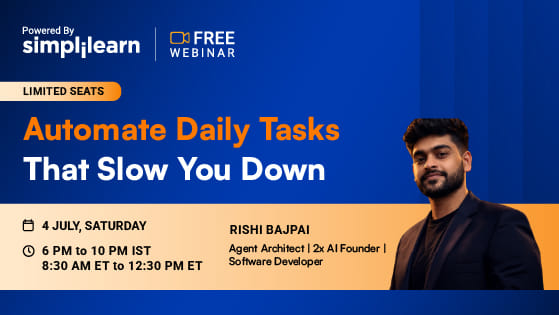
Reclaim 10 Hours of Your Week With AI Automation
Articles and Ebooks That You Can Access For Free

How to Become a Machine Learning Engineer?

Unlocking Client Value with GenAI: A Guide for IT Service Leaders to Build Capability

AI Engineer Salary in India: The Lucrative World of AI Engineering

GenAI in the Fast Lane - A Guide to Turbocharge Your Organization’s Capability








How to Become a Machine Learning Engineer?
Unlocking Client Value with GenAI: A Guide for IT Service Leaders to Build Capability
AI Engineer Salary in India: The Lucrative World of AI Engineering
GenAI in the Fast Lane - A Guide to Turbocharge Your Organization’s Capability
Learners Also Explore






Connect with our learning consultant to get all your questions answered about programs, faculty, and more
Frequently Asked Questions
Python is the dominant language for integration/deployment tasks, appearing in 66 percent of FDE job postings analyzed in 2026. TypeScript, Go, and Java appear frequently as second languages, while SQL is ubiquitous.